NEET 2026 Counselling Mistakes Students Should Avoid
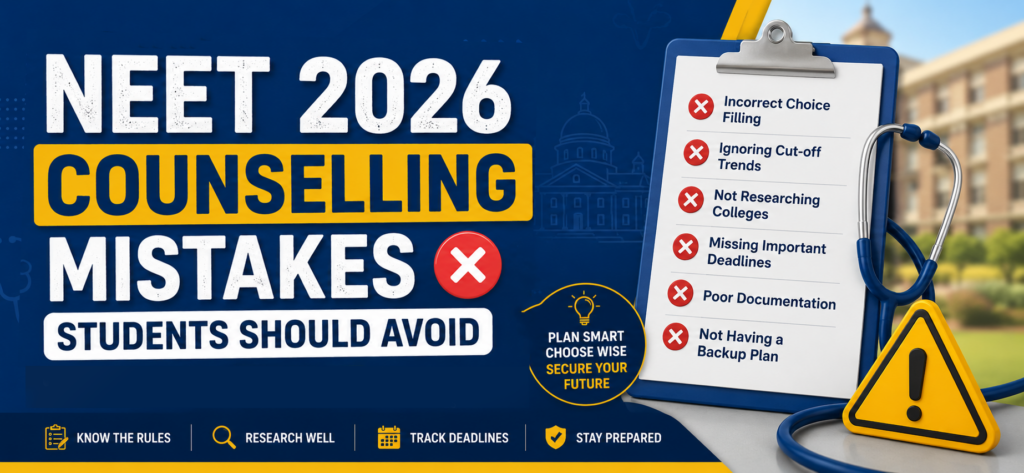
NEET 2026 Counselling is the final and, for many families, the most nerve-wracking stretch of the entire medical admission journey. Cracking the exam is only half the battle; how you handle registration, choice filling, and seat acceptance through the Medical Counselling Committee (MCC) and your respective state authority often decides whether your rank actually converts into a confirmed MBBS, BDS, or AYUSH seat. Every year, thousands of well-scoring candidates end up disappointed, not because their rank was poor, but because of avoidable errors made during counselling itself.
This is exactly why guidance matters just as much after the exam as it did before it. Students preparing under structured mentorship, such as those enrolled with the Best NEET Coaching in Sikar, often report fewer counselling-stage errors simply because they’re walked through the process step by step rather than left to figure it out alone under pressure. Whether you’re guiding yourself through this process or leaning on a mentor, understanding where students typically go wrong is the first step toward a smoother, stress-free admission.
In this article, we’ll break down the most common NEET 2026 counselling mistakes, explain why they happen, and show you exactly how to sidestep them.
Why Counselling Mistakes Happen More Than You’d Expect
Counselling season is chaotic by design. Multiple rounds, overlapping state and central timelines, tight deadlines, and a flood of information from unofficial sources create the perfect storm for confusion. Add exam fatigue and family pressure into the mix, and it’s easy to see why even sharp, disciplined students slip up. The good news is that nearly every one of these mistakes is preventable once you know what to look out for.
Common NEET 2026 Counselling Mistakes to Avoid
1. Missing Registration or Choice-Locking Deadlines
MCC and state counselling authorities run on strict, non-negotiable windows for registration, fee payment, and choice locking. Waiting until the last hour is risky; server overload, payment failures, or last-minute document issues can lock you out entirely.
- Mark every deadline on a calendar the moment the schedule is released
- Complete registration and payment at least a day before the cutoff
- Never assume a deadline will be extended
2. Filling Too Few Choices
Some candidates list only five or six colleges, assuming they’ll definitely get one of their top picks. If none of those seats are available in that round, the opportunity is wasted.
- Fill in as many realistic choices as the portal allows
- Include a mix of ambitious, moderate, and safe options
- Reorder choices in every round based on updated seat matrices
3. Ignoring the Seat Matrix and Cutoff Trends
Choices filled without checking the current year’s seat matrix or previous years’ closing ranks often lead to unrealistic expectations.
- Cross-check seat availability for your category and quota before filling choices
- Compare at least two to three years of closing rank data, not just the last cycle
- Remember that seat matrices can be revised mid-process, so recheck before locking
4. Not Understanding the Difference Between AIQ and State Quota
Confusing the 15% All India Quota with your 85% state quota or missing state-specific eligibility and domicile rules is one of the most frequent and costly errors.
- Register separately for both AIQ and your state counselling, where applicable
- Read your state’s counselling bulletin carefully, since rules vary widely
- Don’t assume your AIQ registration automatically covers state seats
5. Random or Careless Order of Preferences
The order in which you arrange your college and course choices genuinely matters. MCC allots seats based on this sequence, your rank, and category once locked, changes aren’t possible for that round.
- Rank choices by genuine preference, not guesswork
- Avoid copying a friend’s or senior’s exact list without personalising it
- Double-check the course and college code before locking, since name confusion is common
6. Skipping Document Verification Requirements
Every round has a defined list of documents for verification: admit card, rank letter, category certificates, ID proof, and more. Incomplete or incorrect documentation can result in seat cancellation even after allotment.
- Prepare both original and photocopies well in advance
- Keep category, domicile, and income certificates updated and valid
- Carry extra passport-size photographs, as portals sometimes ask for more than expected
7. Misunderstanding Seat Acceptance Rules (Float vs Freeze)
Many students don’t fully grasp what happens when they choose to “float” a seat versus “freeze” it, and end up losing an allotted seat unintentionally in a later round.
- Understand that floating keeps you eligible for upgrades but risks losing your current seat if you don’t report correctly
- Read the exact rules for your specific round, since they can differ between AIQ and state counselling
- When in doubt, consult the official bulletin rather than assuming based on hearsay
8. Relying on Rumours and Unofficial Sources
Coaching WhatsApp groups and social media are often full of unverified “leaked” cutoffs or false deadline extensions that can mislead candidates into risky decisions.
- Cross-verify every update against the official MCC or state counselling website
- Bookmark the official portal and check it directly, rather than trusting forwarded messages
- Treat coaching centre updates as guidance, not gospel — always verify independently
9. Not Having a Backup Plan
Placing all hope on a single top-choice college without considering realistic alternatives, private colleges, deemed universities, or even a repeat attempt, adds unnecessary stress and can lead to rushed, poor decisions later in the process.
- Research deemed and private college fee structures early, since costs vary significantly
- Keep a mental (or written) Plan B before results are even declared
- Talk to a mentor or counsellor about realistic alternatives based on your rank range
10. Overlooking Fee Structures and Refund Policies
Counselling fees, security deposits, and tuition payments differ by category and institution. Missing refund timelines after withdrawing from a seat can lead to significant financial loss.
- Read the refund policy for each round before making payments
- Note that security deposits are sometimes non-refundable after a certain stage
- Keep payment receipts safe for any future reference or dispute
How to Approach NEET 2026 Counselling the Right Way
A calm, organised approach beats last-minute scrambling every time. Create a simple tracker with every round’s key dates, keep your documents digitally scanned and physically ready, and revisit the official bulletin before each stage rather than relying on memory from the previous round. If you’re unsure about a rule, ask whether that’s a school counsellor, a trusted mentor, or the official MCC helpline. Small, informed decisions made consistently through each round matter far more than trying to get everything perfect in one go.
Counselling isn’t just a formality after the exam; it’s a process with its own learning curve. Treating it with the same seriousness as your exam preparation is often what separates a smooth admission from months of unnecessary regret.
Conclusion
NEET 2026 Counselling rewards preparation, patience, and precision just as much as the exam itself does. Most mistakes on this list aren’t about lacking intelligence; they stem from rushing, misinformation, or simply not knowing the rules well enough. By staying organised, verifying every update through official channels, and planning realistic alternatives, you give yourself the best possible shot at securing a seat that matches your rank and aspirations. Approach counselling with the same discipline you brought to your exam preparation, and you’ll navigate it with far less stress and far better outcomes.
FAQs
Missing registration or choice-locking deadlines is the most common and costly mistake, often due to last-minute technical issues or simple procrastination during busy counselling windows.
No. Once choices are locked for a counselling round, they cannot be edited. Review your preference order carefully before confirming the lock.
You generally need separate registration for state counselling, since AIQ and state quota seats are managed by different authorities with different portals and rules.
Failing to report within the specified window can lead to seat cancellation and, in some cases, forfeiture of your security deposit, depending on the round’s rules.
No. Always verify information through the official MCC or state counselling website, since unofficial sources frequently spread inaccurate or outdated updates.
Fill as many realistic options as possible rather than restricting yourself to a handful of top colleges, to improve your chances of seat allotment in each round.
Freezing locks your current seat and removes you from further rounds; floating keeps you eligible for upgrades but carries a risk of losing your current allotment.
They can. Always check the specific round’s official bulletin for the latest document checklist rather than relying on the previous round’s list.