How to Maintain Your Freezer in Florida’s Heat and Humidity
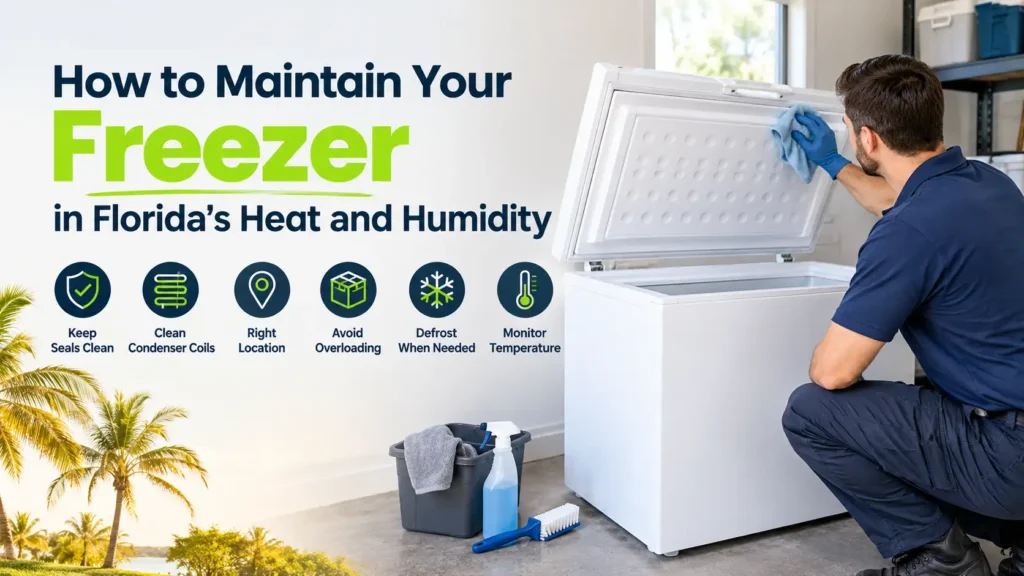
Florida’s warm temperatures and high humidity can put extra strain on household freezers, especially units installed in garages, utility rooms, or other areas without consistent climate control. Regular maintenance can help reduce frost buildup, improve cooling performance, and identify small issues before they become expensive problems. If your freezer is already struggling to maintain its temperature, professional freezer repair in Sarasota can help identify the cause and determine the right solution.

Why Florida’s Climate Can Affect Freezer Performance
Freezers work by removing heat from their interiors and releasing it into the surrounding environment. When the surrounding air is hot, the appliance may need to work harder to maintain its target temperature. High humidity can also contribute to frost formation when warm, moist air enters through an open lid or a poorly sealed door.
These conditions are particularly relevant for standalone freezers kept in garages. Not every freezer is designed to operate efficiently in extreme ambient temperatures, so checking the manufacturer’s recommended operating range is an important first step.
1. Keep the Door Seal Clean and Secure
A freezer’s door gasket creates a barrier between the cold interior and the warmer room. If the seal becomes dirty, cracked, loose, or worn, warm air can enter the cabinet and interfere with cooling.
Check the gasket periodically for visible damage and clean it with a soft cloth and mild soapy water. Once it is dry, inspect the full perimeter to make sure it sits evenly against the cabinet.
You can also perform a simple paper test. Close the freezer door on a sheet of paper and gently pull it. If the paper slides out easily in several places, the gasket may not be sealing properly. This test is only a preliminary check, but it can help you spot a potential problem.
2. Clean the Condenser Area as Recommended
Dust and debris around accessible condenser coils or ventilation openings can interfere with heat removal. When the appliance cannot release heat efficiently, its cooling system may run longer than necessary.
Check your owner’s manual to find out whether the condenser coils are accessible and how they should be cleaned. Unplug the appliance before carrying out any permitted maintenance, and use an appropriate soft brush or vacuum attachment.
Some newer freezers have enclosed or differently positioned condenser systems that do not require the same cleaning routine. Avoid removing sealed panels or attempting to access electrical components yourself.
3. Choose the Right Location for Your Freezer
Where you install a freezer can affect its performance and service life. A garage that becomes extremely hot during summer may expose the appliance to conditions outside its intended operating range.
Whenever possible, place the freezer in a dry, well-ventilated location away from direct sunlight and heat-producing equipment. Follow the manufacturer’s clearance requirements so air can circulate around the appliance.
If a garage is your only practical option, confirm that your freezer is rated for the temperatures it will experience there. A unit that is unsuitable for its environment may struggle even when it is otherwise in good condition.
4. Avoid Overloading the Freezer
A properly loaded freezer can maintain a stable temperature, but packing it too tightly may block vents and prevent cold air from circulating through the cabinet.
Arrange food in a way that leaves the airflow paths clear, particularly in upright and frost-free models. Use containers or freezer-safe bags to organize smaller items and make it easier to find what you need without leaving the door open for long periods.
Avoid placing large quantities of warm food inside at once. Divide fresh food into smaller portions and allow hot food to cool safely before freezing it, following appropriate food-safety guidance.
5. Limit Unnecessary Door Openings
Every time a freezer door opens, warmer air enters the cabinet. In a humid climate, that air can introduce moisture that later freezes on interior surfaces.
Plan what you need before opening the door, close it promptly, and make sure nothing prevents it from shutting completely. Check that packages are not caught between the door and the frame.
If you notice repeated frost accumulation around the opening, inspect the seal and consider whether the door is being left open longer than necessary. Persistent frost can also indicate a defrost-system problem that requires professional attention.
6. Defrost the Freezer When Necessary
Manual-defrost chest freezers need periodic defrosting according to their manufacturer’s instructions. Excessive ice can reduce usable storage space and make it harder to access food.
For safe defrosting, unplug the freezer, transfer food to suitable cold storage, and allow the ice to melt naturally. Towels can help collect water, while bowls of warm water may speed up the process if the manufacturer permits this method.
Never use knives, screwdrivers, heat guns, or open flames to remove ice. These methods can damage the cabinet or refrigerant lines and create a serious safety hazard.
If a frost-free freezer develops heavy ice buildup repeatedly, do not assume it simply needs another defrost. A faulty heater, sensor, fan, or control component may be responsible.
7. Monitor the Temperature
For normal frozen food storage, the recommended freezer temperature is 0°F (-18°C). A separate appliance thermometer can help you confirm that the cabinet is maintaining this temperature.
Check the reading periodically, particularly after loading groceries, changing settings, or experiencing a power interruption. If food begins softening or the temperature remains above the recommended level, investigate promptly.
A freezer that runs continuously, cycles unusually often, or struggles to stay cold may have a dirty condenser, damaged gasket, faulty thermostat, restricted airflow, or another mechanical issue. Temperature readings can help describe the symptoms, but they do not identify the exact failed component.
8. Prepare for Florida Storms and Power Outages
Storms and electrical interruptions can affect freezer operation and put stored food at risk. Keeping the door closed helps preserve the cold for as long as possible during an outage.
A full freezer generally holds its temperature for approximately 48 hours when unopened, while a half-full freezer may hold it for about 24 hours. Actual conditions vary with the appliance, room temperature, and how often the door is opened.
Consider these precautions before storm season:
- Keep a thermometer inside the freezer so you can monitor the temperature.
- Avoid opening the door during an outage unless necessary.
- Keep important appliance and warranty information accessible.
- Follow food-safety guidance when deciding whether thawed food can be kept or must be discarded.
- After power returns, check that the freezer resumes normal operation and reaches its target temperature.
If the appliance trips its breaker repeatedly, smells burnt, or shows signs of electrical damage, disconnect power if it is safe to do so and arrange a qualified inspection. Do not repeatedly reset a breaker that continues to trip.
9. Recognize Warning Signs Before a Breakdown
Small changes in freezer performance can provide early clues that maintenance or repair is needed. Pay attention to symptoms such as:
- Unusual noises: A new or persistent buzzing, grinding, or rattling sound may indicate a fan or motor problem.
- Heavy frost: Repeated ice buildup can point to a seal or defrost-system fault.
- Water around the unit: A clogged drain or defrost-related issue may be responsible.
- Constant operation: Continuous running can indicate poor heat transfer, warm surroundings, a damaged seal, or a cooling-system problem.
- Temperature fluctuations: Food that softens and refreezes may indicate unstable cooling.
Cleaning accessible areas and checking the door seal can help with some minor issues. However, refrigerant-system problems, electrical faults, and failed internal components should be assessed by a qualified technician.
10. Decide When Professional Repair Makes Sense
Routine maintenance helps keep a freezer in good condition, but it cannot prevent every mechanical failure. If the appliance repeatedly loses temperature, develops excessive frost, leaks, or makes unusual noises, a professional diagnosis can prevent unnecessary part replacements and help clarify the available options.
The age of the freezer, the cost of the repair, the availability of parts, and the condition of the rest of the appliance all matter when deciding whether to repair or replace it. A relatively minor issue, such as a damaged gasket or faulty fan, may be worth repairing. A major sealed-system failure in an older appliance may require a closer comparison with replacement costs.
For homeowners dealing with other malfunctioning kitchen or laundry appliances, Appliance Repair in Sarasota provides information about additional repair services available in the area.
Final Thoughts
Maintaining a freezer in Florida’s heat and humidity requires attention to its location, ventilation, door seal, cleanliness, and temperature. Simple habits—such as keeping the door closed, organizing food properly, and following the manufacturer’s maintenance instructions—can help the appliance operate more reliably.
Do not ignore recurring frost, unusual noises, persistent temperature changes, or repeated breaker trips. Identifying a problem early can help protect stored food and prevent a small fault from developing into a more expensive repair.