Why More Businesses Are Turning to Click to Call Solutions in India
A customer visits your website, spends a minute checking pricing, maybe scrolls through your services page, and then disappears.
Not because they weren’t interested. Most of the time, they just didn’t want the hassle of filling out a form and waiting for a callback that may or may not happen.
That small delay costs businesses more leads than they realize.
I’ve seen this happen a lot with growing support teams and sales departments across India, especially in industries where customers expect immediate responses. Real estate companies, healthcare providers, SaaS businesses, logistics firms, even education platforms — they all face the same issue. People want answers quickly. If getting in touch feels slow, they move on.
That’s one reason the demand for a reliable click to call solution in India has grown so quickly over the last few years.
Customers Don’t Want to Wait Anymore
People are used to instant actions now. Food arrives in minutes. Payments happen instantly. Customer communication is expected to work the same way.
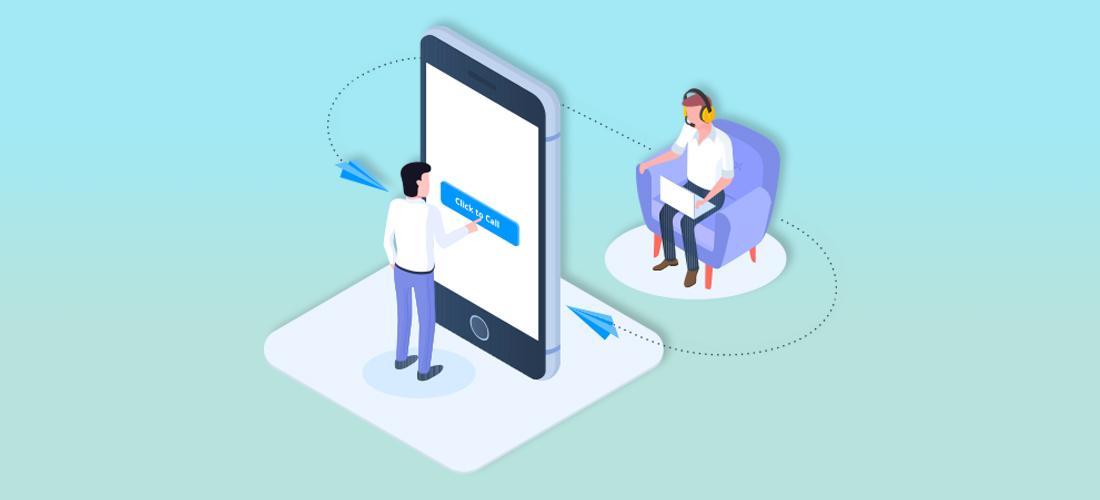
When someone lands on a business website and sees a click-to-call button, the process feels simple. One tap and they’re connected to a sales or support representative immediately.
No long forms. No waiting for email responses.
For businesses, this creates a surprisingly direct improvement in lead conversion.
A mid-sized insurance company I spoke with recently added click-to-call functionality to its landing pages during a campaign season. Their team noticed something interesting within weeks. Phone inquiries increased, but more importantly, the conversations were happening while customer intent was still high.
That timing matters.
A customer who calls immediately after reading about a product usually converts better than someone contacted six hours later.
Why Indian Businesses Are Paying Attention
Businesses in cities like Delhi NCR, Mumbai, Bengaluru, Hyderabad, and Pune are dealing with increasingly competitive customer acquisition costs.
When paid campaigns become expensive, every incoming lead matters.
A lot of companies are now using a click to call solution in India as part of their customer engagement strategy because it reduces friction between interest and interaction.
This is especially common among:
- SaaS companies handling product inquiries
- Hospitals managing appointment calls
- Real estate agencies responding to property leads
- E-commerce support teams
- Financial service providers
- BPO and customer support operations
In many cases, businesses already have support agents and calling infrastructure in place. What they lack is a faster bridge between website visitors and actual conversations.
Click-to-call fills that gap.
The Difference Between a Form Fill and a Live Conversation
There’s something people often overlook.
Forms collect data. Conversations build trust.
A customer speaking directly with an agent can explain concerns, ask follow-up questions, and get clarity in real time. That interaction often reveals buying intent much faster than a lead form ever could.
I’ve noticed that businesses handling high-value services tend to benefit the most from this.
Take enterprise software sales, for example. Decision-makers rarely want to wait through multiple email exchanges just to ask basic questions about pricing, onboarding, or integrations.
One direct call can move the conversation forward much faster.
That’s why many enterprise-focused companies are adding click-to-call options directly on pricing pages, demo pages, and product comparison sections.
Mobile Behavior Changed the Way People Contact Businesses
A huge percentage of users in India now browse business websites through mobile devices.
Typing long inquiries on a phone isn’t always convenient. Calling feels easier.
When businesses ignore that behavior, they lose opportunities quietly in the background.
A properly implemented click-to-call setup removes extra steps for mobile users. Instead of copying numbers manually or switching between apps, customers connect instantly.
It sounds small, but reducing even one unnecessary step can change conversion rates significantly.
Support Teams Also Benefit From It
Most discussions around click-to-call systems focus on sales. Support teams benefit just as much.
Customers dealing with urgent issues often prefer speaking directly with someone instead of creating support tickets.
A logistics company handling delivery operations shared an interesting problem during a consultation discussion. Their customers were abandoning support requests because email responses took too long during peak hours.
After integrating click-to-call support access for priority issues, customer complaints dropped noticeably.
Not because the problems disappeared.
People simply felt heard faster.
What Businesses Should Actually Look For
Not every calling setup works well in practice.
Businesses choosing a click-to-call system should pay attention to things that affect day-to-day operations, not just feature lists.
A few things that genuinely matter:
- CRM integration for tracking customer interactions
- Call routing based on departments or availability
- Real-time analytics for support and sales teams
- Mobile compatibility
- Call recording for quality monitoring
- IVR support for larger operations
- Fast connection speed with minimal call drops
For larger enterprises, scalability matters too. A system that works for ten agents may struggle when teams grow into hundreds of daily interactions.
Why This Matters More Than It Did Five Years Ago
Customer patience has changed.
Businesses that respond quickly usually create stronger impressions, even before the actual service begins.
And honestly, customers remember responsiveness.
If one company responds instantly while another takes half a day to reply, the faster business often gains an advantage before pricing discussions even begin.
That shift is pushing more companies toward communication systems built around immediacy rather than delayed follow-ups.
You can see it happening across industries in India already.
Not as a trend people talk about at conferences.
As a practical response to how customers actually behave now.